
The church exists for one purpose: to proclaim Christ and make disciples. Yet how we fulfill that mission varies greatly across contexts. While we too often depend on the Sunday pulpit alone, others have embraced a lesson Jesus made clear throughout His teaching: tangible acts of service open doors that well-crafted sermons alone cannot unlock.
During my recent trip to Ceará, Brazil, to attend their second state convention, I was moved to hear how the COGOP in Ceará is making the Word become flesh as they reach their community with the gospel. They are doing this one act of service at a time under the servant leadership of Brazil’s national bishop, Dr. Hernandes Fernandes Filho and the regional leadership in Ceará. What follows are some of the social initiatives now happening in Ceará.
In the area of Caucaia, Pastor Valdo Silva has been developing the Project Fraternity and Family since 2016. The initiative combines evangelism with family assistance and, most visibly, with the construction of small houses for families facing vulnerability. This audacious project relies on only a few hands and scarce resources; however, these are overwhelmed by their willingness to love their community sacrificially. Pastor Silva’s work shows what happens when a church takes both the spiritual hunger and the physical hunger of its community seriously.
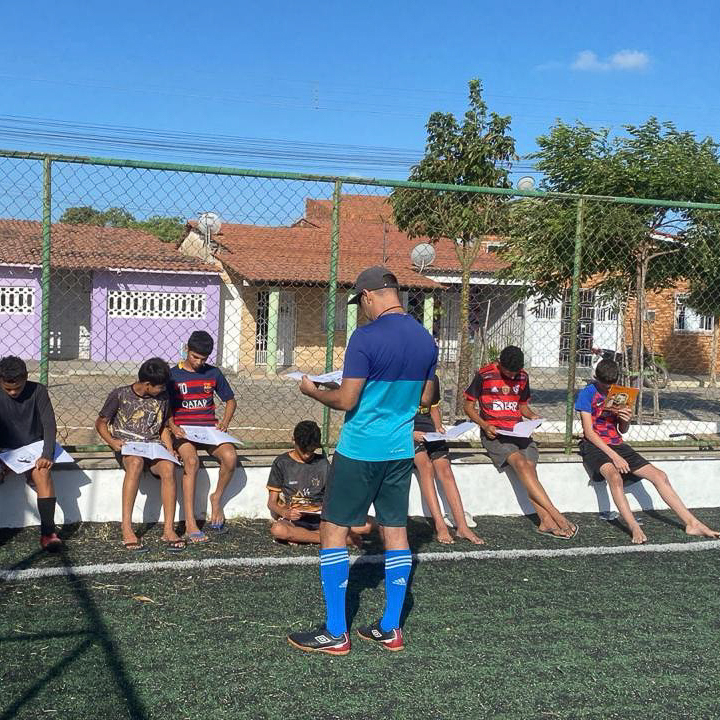
In Fortaleza, a different but complementary expression of service has taken root. The Project Movement and Life, operating for approximately one year, uses volleyball as an instrument for transformation. What began as an experiment with four young people has grown to twenty-one active participants. The church recognized something critical: youth naturally gather on courts and fields. Rather than waiting for them to come to the church building, the church went there. The leaders showed up where young people already were, built relationships in their context, and demonstrated through consistent presence that the gospel is real.
In Santa Quitéria, Pastor João Paulo leads the Institute Ephraim under the motto, Saving Lives and Restoring Stories, a commitment the ministry lives out daily as it coordinates recovery groups for people struggling with chemical dependency, offering accompaniment and community support. The ministry in Santa Quitéria is committed to the idea that the church is the community where broken stories get rewritten.
In the region of Lagoa Salgada, in Cruz, Pastor Júnior directs Project David and Esther toward children. The motto captures the vision: “Today boys and girls, tomorrow kings and queens in God’s presence!” The project’s approach is simple yet powerful: nourish the body, gladden the heart, present Jesus. Addressing physical, emotional, social, and spiritual dimensions simultaneously. To children whose circumstances may have suggested otherwise, the church declares: in Christ you have dignity, value, and purpose.
In Bela Cruz, another iteration of service through sports unfolds. The church uses a soccer program called Soccer is Life as a tool for relationship, reorientation, and spiritual formation. This program is creating spaces where adolescents and young people encounter adults who care, community that accepts them, and a vision of what their lives could become.
The experience of the Church of God of Prophecy in Ceará demonstrates something the contemporary church desperately needs to rediscover. The church’s credibility in a community does not ultimately rest on theological statements or institutional structures. It rests on whether people who are hungry, broken, marginalized, and struggling actually encounter a church that cares. Whether the church shows up. Whether it stays. Whether it sacrifices.
Feeding the hungry, welcoming a family, offering opportunity through sports, accompanying a young person, supporting the recovery of the addicted, building shelter for the homeless, teaching God’s Word, and praying with families are not separate activities. They are different expressions of a single Christocentric conviction: the church has been called to serve.
Service is not what the church does. Service is who the church is. Incarnational ministry finds its truest expression not in committee meetings but on the streets, in communities, in social projects, on sports courts, in families, and in the daily rhythms of people’s actual lives. As the apostles knew well, these are the very places where tangible service opens doors that sermons alone cannot unlock.
In Ceará, the Word is still becoming flesh. That signature is being written in the lives being changed and the gospel being announced by a people determined to reconcile their community to Christ through the power of the Holy Spirit, one act of service at a time.