
When our journey with the Church of God of Prophecy began, affiliation was nowhere on our radar. Restoration Church in Bay Minette, Alabama, was an independent church with momentum, vision, and a heart for planting churches. We were raising leaders, developing ministry, and had already begun planting a daughter church. We believed strongly in what God had called us to build, and we weren’t necessarily looking for a denomination. Looking back now, however, I can see that God was already building a relationship we didn’t yet recognize. And strangely enough, He used the keys to a nearly closed church to open the door.
One of Restoration Church’s spiritual sons, Cedo Coon, was being raised up through Restoration to pastor our daughter church when his father, Clayton Coon, received an unexpected call. Brother Don Stanton was trying to help the Church of God of Prophecy relaunch a church in the Poarch community. Brother Don, who is Native American himself and carries a deep burden for Native American ministry, knew very few people within our tribe, the Poarch Band of Creek Indians. One of those people happened to be Clayton.
Clayton told him that he knew a preacher who might be able to help; his son, Cedo. Brother Don traveled from central Alabama and met Cedo for lunch. They talked about the church and the possibility of getting something started again, and before the meeting ended, Brother Don handed Cedo the keys to the building. I still remember Cedo calling me afterward and saying, “They gave me the keys to the church. What am I supposed to do with them?” I laughed and told him, “Go unlock it and go inside!”
None of us understood what God was beginning.
Cedo began cleaning and straightening the building, and plans were made for a two-night revival. Several COGOP churches came down to help clean, get the air conditioning working, and set up sound equipment. Cedo preached the first night, and Presbyter DeWayne Smith preached the second. That was where I first encountered several COGOP leaders, including Brother Don Stanton, Bishop Richard Ramsey, and Pastor Christina Middleton. At that point, we barely knew each other. They didn’t really know Restoration, and I didn’t know much about COGOP.
As Cedo continued trying to balance his new pastoral responsibilities at our daughter church with the possibilities at Poarch, he eventually asked me to step in and help with administration and communication. He told me plainly, “I don’t want to continue with this if you’re not in it with me.” So as his leader and covering, I stepped in, and Brother Don and I began talking regularly. He shared the vision for Poarch and explained how important it was to see life return to that church. He also shared his heart for Native American ministry.
I started doing what I naturally do: asking questions. What exactly were we trying to build? Was the goal an occasional revival service, or did COGOP really want a functioning local church? If Cedo and Restoration invested our relationships, resources, credibility, and ministry into rebuilding this work, what would its future look like? Those questions mattered deeply to me. Cedo and I are both tribal members, and ministry within our own community carried a particular responsibility. At that point, I still knew very little about COGOP beyond Brother Don, a few leaders I had briefly met, and an old church building. After prayer and several conversations, I eventually told Brother Don I needed to step away and allow him and Cedo to continue on down that journey. I didn’t believe I could put Restoration behind the project without greater clarity.
I thought that might have been the end of my involvement. God knew it was only the beginning.
Not long afterward, Bishop Richard Ramsey called me on a Friday evening and asked if I would meet him for breakfast the next morning. He was traveling down from Huntsville, Alabama, and also wanted to tour Restoration Church. We met at a small restaurant in Bay Minette. Other than briefly seeing one another at the Poarch revival and speaking by phone a couple of times, we really didn’t know each other.
We started casually, getting acquainted and eating breakfast. Then, about a quarter of the way through his meal, Bishop Ramsey pushed his plate away, crossed his legs, and got straight to business. I admired his straightforward approach, and it truly caught my attention. He began talking about South Alabama. He described churches that were struggling, facilities that needed attention, churches that had closed, one that had burned, and congregations that needed strengthening. Then he began talking about what he saw in me and how he believed my experience in church planting and revitalization could potentially help.
After breakfast, we drove to Restoration Church. Bishop Ramsey walked through our building taking pictures. He expressed his appreciation for what he saw—the atmosphere, presentation, intentionality, and culture we had worked hard to build. Reminder, this was an independent plant with only a word from the Lord and a whole lot of passion. I remember him expressing that he hoped churches throughout the South could eventually have that kind of look and feel. Something shifted for me that day. He wasn’t approaching me simply because COGOP had needs. He was recognizing that God had already placed something valuable within Restoration that could potentially strengthen the churches he served.
Over the next couple of weeks, I prayed. Restoration was flourishing. We had momentum, we were completing the development of our first daughter church, and we had great aspirations for our future. I wasn’t looking for somewhere else to go. Yet I couldn’t shake the possibility that God was opening another door.
When Bishop Ramsey and I talked again, he proposed something that got my attention. I could become a licensed COGOP minister and begin serving in South Alabama while Restoration remained independent. We would work together, build relationship, and evaluate the journey over approximately two years. Doing kingdom work together. That mattered to me because Bishop Ramsey was willing to take a risk. As state bishop, he was willing to trust an independent pastor with an assignment among COGOP churches without demanding that my church affiliate first. I realized that if he was willing to put some skin in the game, perhaps I could too. We were both taking a risk on relationship.
Meanwhile, Cedo’s responsibilities at our daughter church continued increasing. Eventually, he called me and told me he couldn’t carry Poarch too. He needed to give his full attention to the church he was pastoring and was ready to return the key back to Brother Stanton.
I told him, “Hold up on the key.”
By then, something had changed in me. I explained what Bishop Ramsey and I had been discussing and asked Cedo whether, if he truly felt released from Poarch, if would he be comfortable with me taking responsibility for it. He agreed, and the key changed hands again.
This time, when I walked into that building, I saw it differently. I was beginning to understand the condition of the churches across South Alabama and hear the heart of state leadership. What had initially looked like an old building needing an occasional service now looked like a church that needed to live again. At the same time, the assignment Bishop Ramsey and I had discussed was becoming clearer: serving in Church Planting and Revitalization across South Alabama.
Suddenly, Poarch made sense.
For years, I had carried a burden to see a church closer to the Poarch community. Several people from that area had been part of Restoration from our beginning, but traveling approximately 35 minutes to Bay Minette was difficult for families. One of those people was Dakota Barlow, another tribal member of the Poarch Band of Creek Indians. I knew Dakota’s heart and sensed that he could eventually become the leader of this church. I talked with Cedo and Dakota, and we agreed that Dakota was the man for the assignment.
In October 2025, we went to work remodeling the Poarch Church. We weren’t simply repairing a building; we were reimagining what a functioning, healthy church in that community could become. The atmosphere began changing. The look began changing. The Restoration DNA Bishop Ramsey had seen in Bay Minette began appearing in Poarch. A building that had nearly reached the end of its story was beginning another chapter, and so was I.
I verbally accepted Bishop Ramsey’s offer and officially began serving in the role in early 2026. But something was happening alongside the work. My relationships with Bishop Ramsey and Brother Don were becoming more than organizational relationships. We were becoming friends and partners in Kingdom work.
I began meeting pastors throughout South Alabama and learning their churches and stories. Bishop Ramsey opened doors for me to grow, including the opportunity to attend DCPI Church Planting Essentials training. He later asked Restoration to host a South District gathering called the Enlarge Our Coast Conference, where I would serve as a key speaker. It became an opportunity for us to begin envisioning together what church planting and revitalization could look like across the region.
One relationship during that season became especially significant. Pastor Christina Middleton was serving as South District Supervisor while pastoring Christian Fellowship COGOP in Robertsdale, Alabama. Christina and her family played a pivotal role in helping me become comfortable with the world I had stepped into. Her transparency, heart for God, and willingness to build genuine relationship mattered to me.
We visited Christian Fellowship and other churches across the South, and we began talking seriously about church health and revitalization. I later invited Christina to preach at Restoration’s annual Campmeeting. Her family came, our people connected with them, and something very simple but important happened: they fell in love with us, and we fell in love with them.
The Church Planting and Revitalization assignment carried very little positional authority.
I couldn’t force a church to change; pastors had to trust me enough to invite me into their journey. Christina did. She saw elements of Restoration’s atmosphere and culture that she wanted to develop at Christian Fellowship and opened the door for us to begin walking alongside them in a revitalization journey. I began realizing that what God was doing in South Alabama was going to be built through relationship.
Strangely enough, that was exactly what God was doing with me.
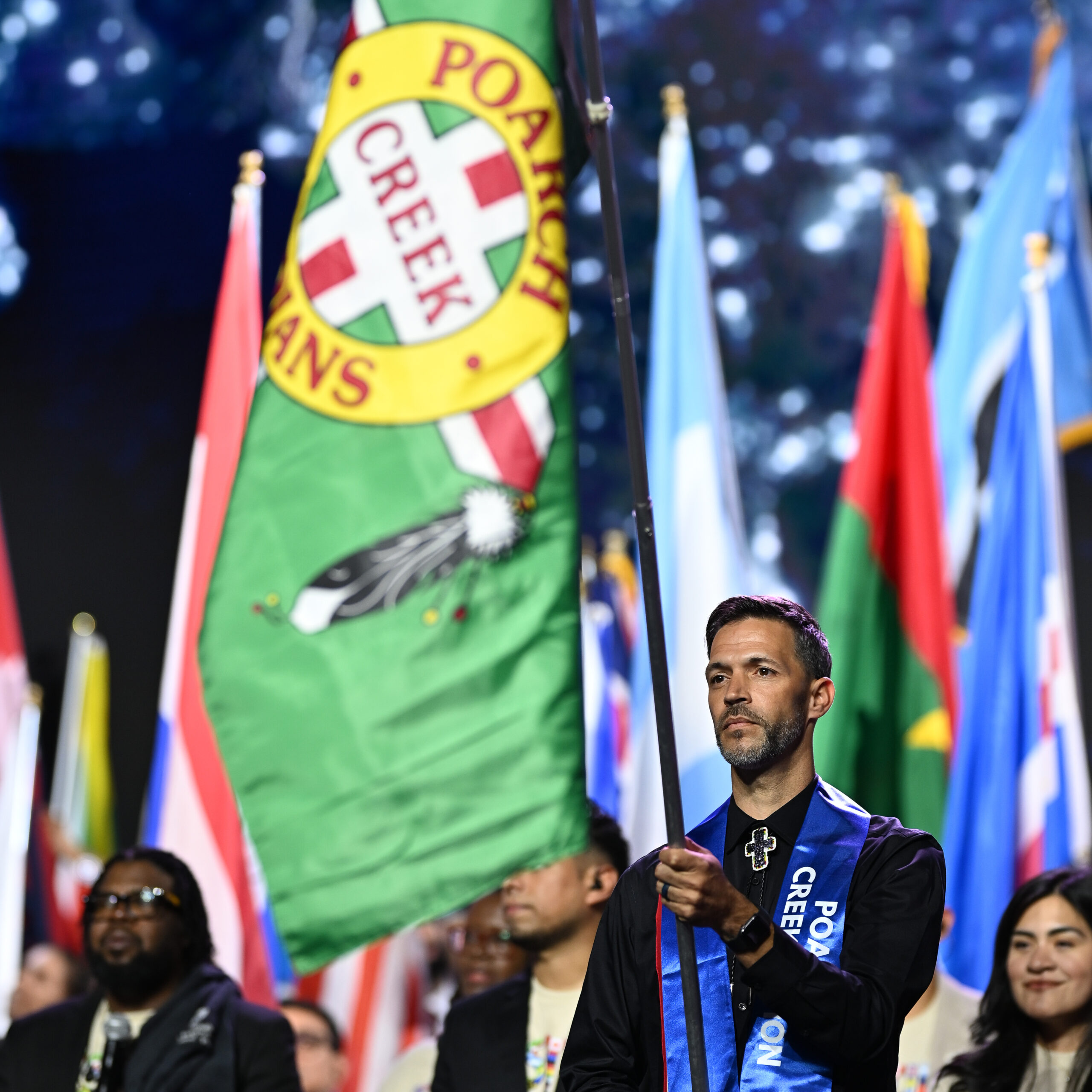
Then came the 2026 International Assembly in Orlando. The Poarch Band of Creek Indians was recognized within the global missions work of the Church of God of Prophecy, and I had the incredible privilege of carrying the Poarch flag in the Parade of Nations. Many of our Restoration leaders also wanted to attend the Assembly. We didn’t realize beforehand how much God would use that experience to open our eyes to the scale and scope of the movement. We saw the nations. We saw generations worshiping together. We saw a shared platform with other church movements. We experienced the heart of COGOP beyond South Alabama and beyond the United States.
Other experiences, including leadership development at Camp Boothe, continued exposing us to the movement. I immersed myself in COGOP sermons, literature, history, vision, governance, and beliefs. The more I learned, the more something surprising happened: it felt familiar.
Restoration believed in Spirit-led leadership, developing and releasing leaders, church planting, reaching younger generations, missions, holiness, reconciliation, and using every available means to communicate the gospel. Again and again, I discovered those same values within COGOP. I fell in love with the movement’s origin story. I appreciated the openness concerning its ups and downs. I appreciated its governance and connected with its culture. I began recognizing an alignment between what God had been building in Restoration and what this global family believed God had called it to become.
Nobody had pressured us. Nobody had demanded our church. We had simply been given room to serve, observe, build relationships,
something happened almost without me noticing.
I stopped thinking of COGOP as “them.”
It had become “us.”
By then, we weren’t trying to become something different. We were discovering a family that carried much of the same DNA God had already placed within us.
There is a beautiful irony in how God brought the story together. Our relationship with COGOP began because they trusted us with one of their buildings. Now Restoration Church was facing a major decision concerning ours.
For some time, Bishop Ramsey had expressed that he believed Restoration’s facility could become a regional hub for ministry in South Alabama, and he had openly shared his desire to see Restoration become part of COGOP. Yet he never forced that decision. Then an opportunity came for Restoration to purchase the facility we had been leasing. We had a short window to make the decision and needed additional resources to complete the process.
By then, however, the conversation wasn’t simply about a building. Months of relationship had happened. We had labored together, worshiped together, traveled together, and dreamed together. COGOP had trusted me with its churches before Restoration ever carried its name. Now Restoration had to decide whether we trusted this family enough to connect our future with theirs.
We did.
COGOP leadership stepped forward and invested in Restoration’s future, just as Restoration had invested in the future of Poarch and South Alabama. The building didn’t create the relationship; it revealed how far the relationship had already come and that the divine providence of God was taking place. What began with the key to a struggling church in Poarch had come full circle.
On August 30, 2026, Restoration Church officially became part of the Church of God of Prophecy. Standing there that day, one of the strongest emotions I felt was relief. For years, I had desired spiritual covering, but I had determined that I would never manufacture it simply because I wanted one. I needed God to lead us to the right relationships, the right family, and the right season. That day there was peace. There was joy. There was belonging.
I was proud of Restoration for recognizing that God was calling us to become part of something larger than ourselves. I was proud of South Alabama, a district that had experienced real struggle but where we were beginning to see signs of renewed life. And I was deeply grateful for the leaders God had used throughout the journey.
Brother Don Stanton made a phone call because he carried a burden for Native American people, never knowing where that call would lead. Alabama State Bishop Richard Ramsey was willing to sit across a breakfast table from an independent pastor and see possibility instead of difference. He was willing to trust before there was affiliation. Pastor Christina Middleton and the pastors of South Alabama allowed relationships to become friendships and assignments to become shared mission.
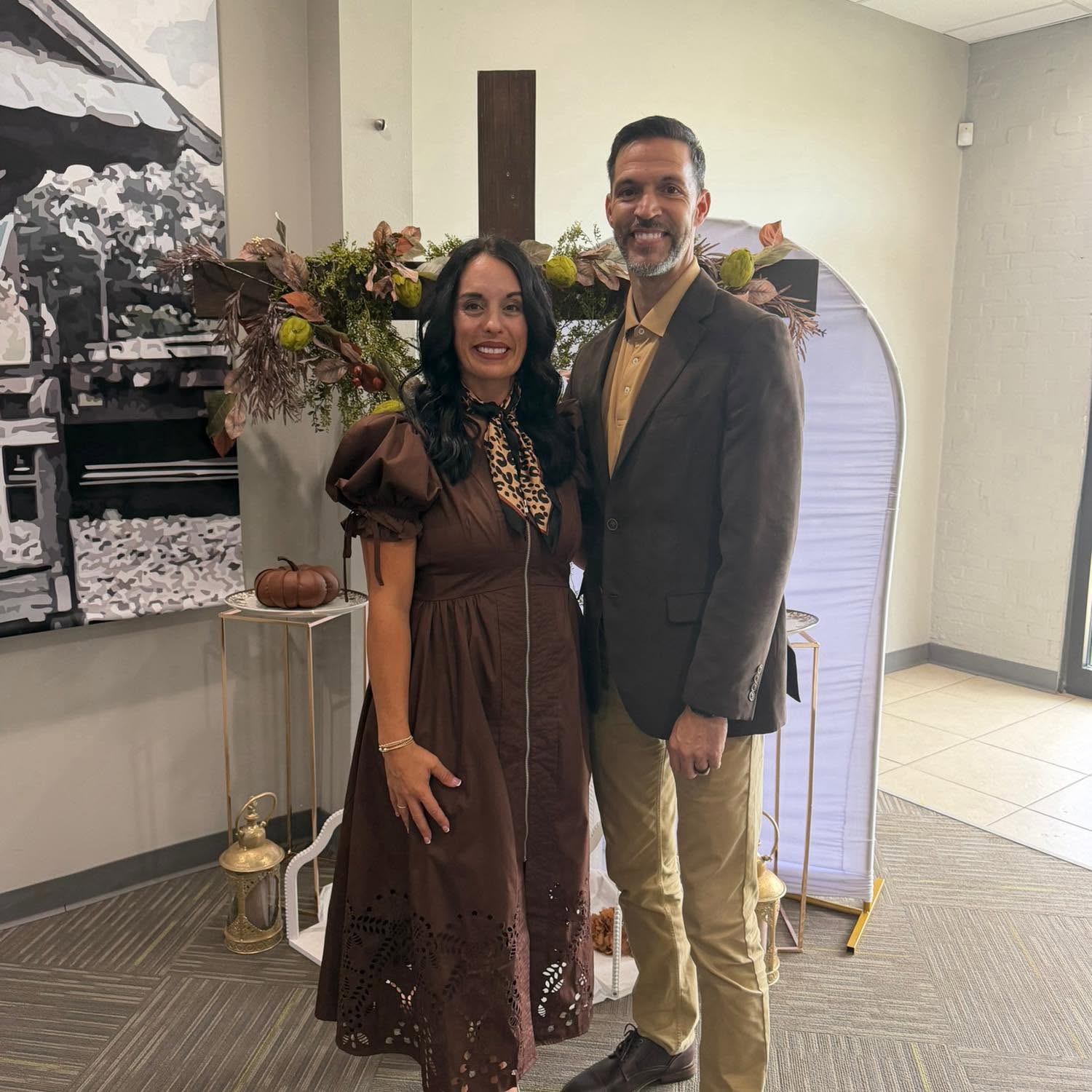
Then the journey came full circle in another way. As Bishop Ramsey prepared to complete his tenure in Alabama and Bishop Tim Douglas prepared to lead the state into its next season, one of Bishop Ramsey’s final official acts was to stand in Bay Minette and receive Restoration Church into the Church of God of Prophecy. The man who had driven from Huntsville to Bay Minette to eat breakfast with an independent pastor was now standing inside that pastor’s church welcoming us into the family. And our new State Bishop was standing with us, representing the future we would now build together.
For me, it felt like both an ending and a beginning.
I realized that becoming part of COGOP didn’t require Restoration to surrender the identity God had given us. Instead, we had discovered covering without losing calling, family without losing identity, and connection without losing mission. We weren’t losing Restoration; we were bringing what God had placed in our hands into something much larger than ourselves.
Looking back, perhaps the greatest lesson of our journey is that nobody recruited us into this movement. They built relationship with us. Don reached out. Cedo opened a door. Ramsey sat across a breakfast table. Poarch gave us a mission we could share. Christina and the South gave us a family we could love. The International Assembly allowed us to see the world we were becoming part of. And the Church of God of Prophecy gave us enough room to discover for ourselves where God was leading.
Relationship came before affiliation. Trust came before commitment. Mission came before membership. Somewhere along the journey, “they” became “we.”
Today, the little Poarch Church that once faced the possibility of being sold is being relaunched under emerging Native leadership. Restoration is helping strengthen and revitalize churches across South Alabama, and the independent church that once cautiously researched the Church of God of Prophecy is now proudly part of its global family.
Perhaps that’s what makes this story so meaningful to me. God used a struggling church in the tribe that I grew up in that almost closed as the doorway to connect people who didn’t yet know they needed one another.
COGOP had something Restoration needed. Restoration had something COGOP needed. Poarch needed both of us. And the Kingdom was bigger than all of us.
We didn’t arrive here through a recruitment strategy. We arrived here through prayer, shared mission, MUTUAL RISK, genuine friendship, and the providence of God.
By the time August 30 arrived, we weren’t asking anymore whether Restoration belonged in the Church of God of Prophecy. God had already answered that through the journey.
We had found home.
And now, together, we look toward the harvest as one church.