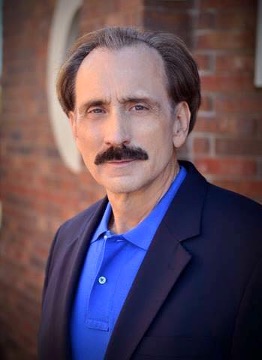

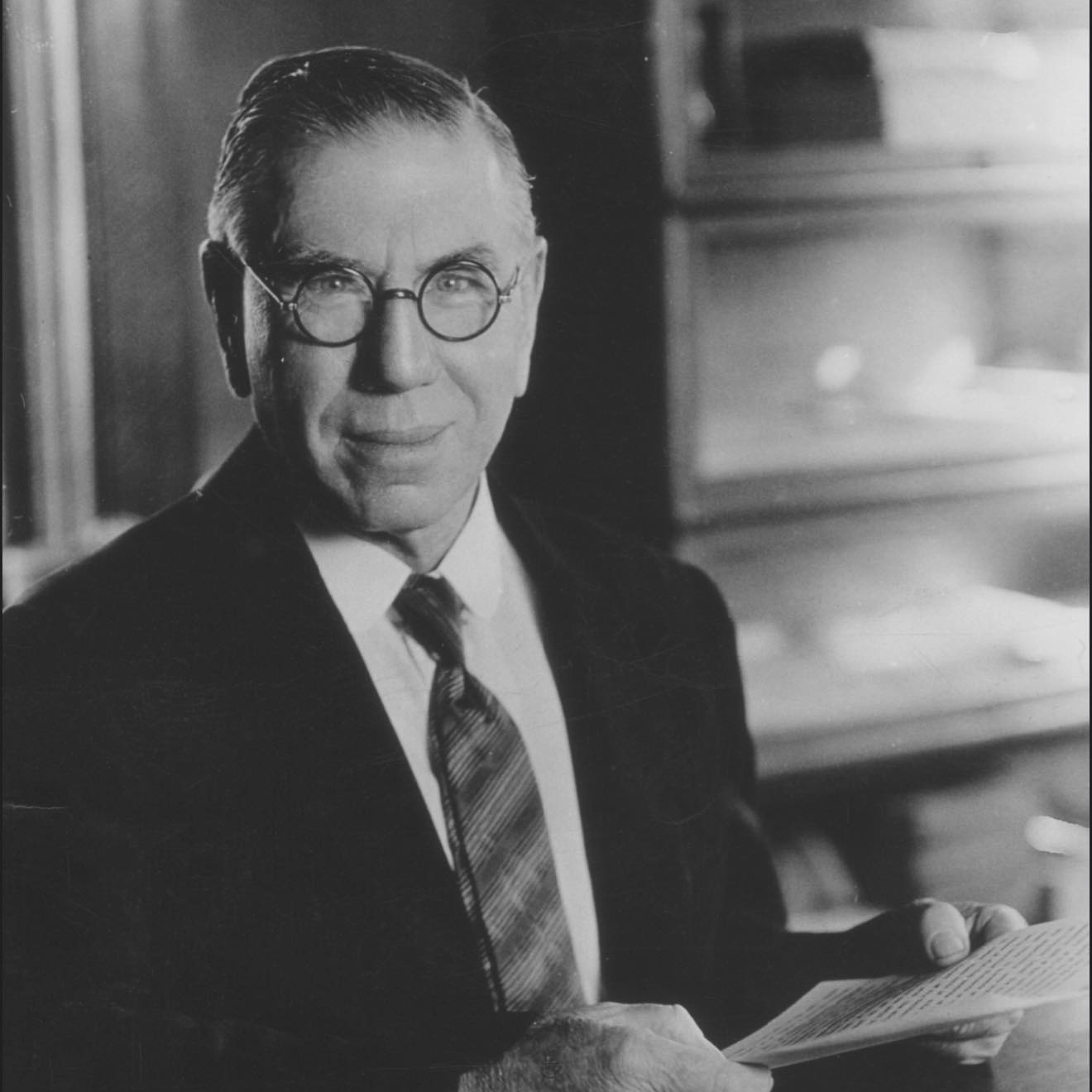
In Part 1 of this article, published in the July 2026 White Wing Messenger, Dr. Harold Hunter shared some background information that influenced the spiritual formation of A. J. Tomlinson and the trajectory of a multi-ethnic movement that would come to be known as the Church of God of Prophecy, a church for all nations.
Pentecost Linked to Reconciliation
Looking back, Tomlinson would say he became “more fully awakened” in January 1907 about the fledgling Pentecostal Movement. The Last Great Conflict would praise “Dr. Seamore”—actually W. J. Seymour, pastor of the legendary 1906 Azusa Street Revival in Los Angeles—whose message of Pentecost that washed away the “color line” spread around the world.[1] The priority of Azusa Street was obvious when A. J. Tomlinson started The Evening Light and Church of God Evangel and later ran a series on Pentecostal history in The Faithful Standard.[2] Tomlinson preached on “the baptism with the Holy Ghost and Fire” at the 1907 Assembly, but his own personal Pentecost did not come for one full year.
Tomlinson invited G. B. Cashwell to preach in Cleveland at the conclusion of the 4th Assembly in 1908. A minister with the [Pentecostal] Holiness Church of North Carolina, Cashwell traveled to Los Angeles to experience the Pentecostal outpouring firsthand. Apparently, Cashwell’s latent racism resisted the message of racial reconciliation that was part and parcel of Seymour’s Azusa Street Mission. However, after five days of praying for deliverance, Cashwell consented to have Blacks lay hands on him, whereupon he received a fiery baptism in the Holy Spirit with the sign of speaking in tongues. When Cashwell preached in Cleveland on Sunday morning, January 12, 1908, Tomlinson would pen one of the most celebrated accounts of transportation in the Spirit that carried him into countries with ten different languages.[3] Here, finally, the flame was lit for Tomlinson himself that would forever change the destiny of many related in one way or another to the Pentecostal branch of the Church of God movements.
Tomlinson personally carried this flame to many locations, but none more important than the Pleasant Grove camp meeting in Florida. His diary dated May 22, 1909, announces the first of several visits by Tomlinson to this venue. Among those who received the Pentecostal message here were Edmund and Rebecca Barr. On May 31, 1909, Tomlinson would grant evangelist licenses to both of them. By November 1910, the Barrs took the same message to Edmund’s native Bahamas, making African American Rebecca the first Church of God missionary.[4] It was February 1911 when Tomlinson held his first international campaign in Nassau.
Later in 1911, New Mexico added a congregation of Mexican Americans in Raton. In his diary dated February 27, 1912, Tomlinson reports on a convention he attended in Raton that required a Spanish-speaking interpreter. The Assembly of 1913 would count three Spanish-speaking congregations in New Mexico. Juan B. Padilla, who first assisted T. F. Chávez while pastor of the original congregation in Raton, was ordained a bishop in 1913 and became pastor of Corrumpa, New Mexico. On July 3, 1936, A. J. Tomlinson would grant Church of God of Prophecy ministerial licenses to this same Juan Padilla.[5] J. O. Sandoval, an evangelist in Colorado, wrote A. J. Tomlinson late in 1923, pledging his support. Sandoval’s printed stationery read, “Iglesia de Dios, Oficina Principal en Cleveland, Tenn. A. J. Tomlinson, Sobreveedor.”
At the 1915 Assembly, Edmund Barr began a two-year term as overseer of the “Colored” work in Florida. C. F. Bright was appointed overseer of Pennsylvania in 1919, then New Jersey in 1920. Tomlinson seemed agitated that, before 1919, Blacks were only called on extemporaneously during the Assemblies. At the 1917 Assembly, an unnamed person suggested that the Church of God Evangel should also be published in Spanish for “Mexicans and other Spanish-speaking people.” A Native American from Oklahoma addressed the same Assembly.[6] Tomlinson propelled this cause forward in his 1919 annual address by applying the apostle Paul’s “one blood” to affirm a universal humanity. Tomlinson added, “Our dark-skinned brothers and sisters have received the Holy Ghost as well as we, and we have long ago learned that God is no respecter of persons.”[7]
African Americans like T. J. Richardson were part of the Council of Seventy and various Assembly committees starting in 1921. The number of Blacks present during these Assemblies is unknown, but it is known that they were relegated to segregated seating. In the 1922 General Assembly, A. J. Tomlinson pointed to the number of Blacks that were leaving the Church in order “to be perfectly free in every respect.” A loss of 1,744 members was reported in 1921, with perhaps most of the Blacks going to the Church of God in Christ. Tomlinson lamented that “South of the Mason and Dixon line it is difficult to show them all the courtesy that we would like to” and exclaimed, “I do not like any separations between nationalities and races.”[8]
The Church of Destiny
A. J. Tomlinson’s diary is silent from September 2, 1921, until February 28, 1924, when he writes, “Much has happened since my last writing, and my time has been so taken that I have not had time.”[9] This is a considerable understatement about a tumultuous era that would see Tomlinson emerge as general overseer of the newly formed Church of God of Prophecy (CGP in this article). The turmoil was to Tomlinson a battlefield over theocratic government. For his heirs, the discussion has come to be framed with an emphasis on calling and gifting.
The 1923 CGP records reveal a Black constituency in Florida, North Carolina, Georgia, Alabama, Kentucky, New York, and Tennessee. From this point on, Blacks were present on all General Assembly programs, not only as singers, but also as preachers, leaders, and members of important committees. In 1924, the General Assembly passed a resolution against the Ku Klux Klan. When Stanley Ferguson died in 1934, A. J. Tomlinson ordered flags lowered to half-mast, and the church observed three days of mourning.
During the 1926 General Assembly, A. J. Tomlinson took up the question of Blacks having their own sub-organization within the larger organization. Tomlinson said that this approach had been imposed by the 1921 constitution, and it resulted in keeping the races apart. Since this constitution had been dismissed by CGP in 1923 with support from Ferguson and Richardson, the segregated structure would be discontinued. Among the results of this decision were ministers put in prison for mixing races and others who suffered bodily harm for participating in mixed-race meetings.
Writing to the state overseers in advance of the 1932 General Assembly, Tomlinson said of the state marches that no one other than the overseer speaks “. . . except in states where there are Colored representatives or Indians or other races.”[10] During this Assembly, Tomlinson would reaffirm that “the middle wall of partition is broken down between the races. . . .”[11] He appropriated Jeremiah’s “speckled bird” to exhort the union of “. . . the whites, the colored, the browns, the Indians, called the red men, the yellow race—and all under one government, one rule, one faith or doctrine—all one.” This language may sound obtuse to 21st-century ears, but it was a vehicle used to espouse a ministry of reconciliation.
That same Assembly featured sermons by Stanley Ferguson, J. R. Smith, and Olive B. Smith, while Francisco Olazábal and Patty K. Scotton led the annual healing service. Olazábal has been compared favorably to Oral Roberts and Benny Hinn. Dubbed El Azteca, Olazábal joined the CGP on September 10, 1936, before a spellbound General Assembly, thus adding to the rolls a reported body of 50,000 Spanish-speaking adherents.[12] This union was never realized, though, because Olazábal died tragically in a 1937 automobile accident—this, despite the courting of Frank Olazábal in New York by Homer Tomlinson and A. J. Tomlinson’s appearances before the Council of Latin American Churches. In 1938, A. J. Tomlinson was joined by his son Homer, who spoke at this convention in Spanish. L. A. Moxley, a European American leader, preached on all races being joined in one body.[13]
Middle Wall of Partition
At the General Assembly in 1935, A. J. Tomlinson spoke of the “middle wall of partition” that had been “broken down by the cross” and spoke of the tragedy of the limited increase of Black membership. Mississippi, an example he cited, had 1,022,009 Blacks, and yet CGP had only one small Black church.[14] The General Assembly in 1936 said that an orphanage must be opened for children of Color because the church is “for all races.” At the next General Assembly, W. M. Lowman and L. A. Moxley, European American leaders, preached sermons on reaching all races. Others who spoke that year were Dorothy Deadrick, J. R. Smith, and R. C. Smith. In 1938, C. H. Holly preached an Assembly sermon on bringing in all races, including Cubans. A. J. Tomlinson established churches in Puerto Rico in 1926 that were lost, but a successful campaign was completed there by 1940.
Tomlinson suffered a stroke in 1937 and soon thereafter turned his diaries over to his elder son, Homer, to write a history. In 1939, A. J. Tomlinson began to purchase land that evolved into a 216-acre biblical theme park located in Cherokee County, North Carolina. The erection of makeshift markers was recorded in Tomlinson’s diary on November 15, 1940. One marker at the newly named Fields of the Wood was “Prayed and Prevailed,” and another proclaimed “Arise shine, for thy light is come, June 13, 1903.” Like efforts culminated in a grand celebration held on September 7, 1941, when Tomlinson recounted in detail the proceedings on June 13, 1903. When the group reached the steepest part of the mountain, they were greeted by a dramatic demonstration of the “Great Speckled Bird,” which emphasized the inclusion of all races. The group then sang the old country anthem by the same name as it had been revised by Homer A. Tomlinson and Sarah Dillon.
Tomlinson’s annual address during the 1941 General Assembly returned to the theme of breaking down the “middle wall of partition.”[15] That same Assembly reported on work among Native Americans in South Dakota and featured a sermon by Ralph C. Scotton on “All Races in One Mighty Church with Christ the Head for All.” Scotton, who attended the inaugural session of Bible Training Camp two months earlier, was appointed Field Secretary No. 2 at this Assembly. The 1942 General Assembly heard sermons from Dorothy Deadrick, Pattie K. Scotton, and Ralph Scotton on “Work Done by Colored People.” The 1943 General Assembly heard again from Dorothy Deadrick, Alvin Moss, and another Ralph Scotton sermon about Black progress. A. J. Tomlinson passed away less than one month after this General Assembly.[16]
Epilogue
On the 30th anniversary of June 13, 1903, Ambrose Jessup Tomlinson depicted himself on that earlier day as “. . . a ship at sea with no rudder by which it should be controlled.”[17] Today, we pause, but for a moment, to reflect on the legacy of this towering pioneer of the Pentecostal Movement who found an anchor. As we look back, may we see the future more clearly.
_______________________________________________
[1] A.J. Tomlinson, The Last Great Conflict (Cleveland, TN: Walter E. Rogers, 1913), 137.
[2] See: The Evening Light and Church of God Evangel (March 1 and March 15, 1910); “History of Pentecost,” The Faithful Standard 1:5 (Aug 1922).
[3] A.J. Tomlinson, diary, vol. 2, January 13, 1908. Manuscripts Division. Library of Congress, Washington, D.C. Cashwell experienced limited interracial church activity before going to the Azusa Street Mission in Los Angeles.
[4] See Andrew Hudson, “The Pentecostal Construction of Race: Churches of God in the American Religious Frontier 1885-1995,” 2019 PhD dissertation, University of Pennsylvania.
[5] Juan B. Padilla, Ministers’ Records, Church of God of Prophecy Archives.
[6] Minutes of the Thirteenth Annual Assembly of the Churches of God: Held at Harriman, Tenn., November 1-6, 1917, 26, 30.
[7] Historical Annual Addresses: A.J. Tomlinson, compiled by Perry Gillum (Cleveland, TN: White Wing Publishing House & Press, 1970), 1:109.
[8] Historical Annual Addresses, 1:197.
[9] A.J. Tomlinson, diary, vol. 4, September 2, 1921. Manuscripts Division. Library of Congress, Washington, D.C. The courts would name the new group Tomlinson Church of God, and it would not have survived were it not for the response by Ferguson in the Bahamas. See Harold D. Hunter, “Migration Built the Tomlinson Church of God Octagon: Waves from the ‘Sea Wader’ Strike the Empire,” Historical Society of Church of God Movement, May 23, 2024, North Cleveland Church of God, Cleveland, TN.
[10] Lillie Duggar, A.J. Tomlinson (Cleveland, TN: White Wing Publishing House, 1964), 793.
[11] Historical Annual Addresses: A.J. Tomlinson (Cleveland, TN: White Wing Publishing House & Press, 1971), 2:170.
[12] See Gastón Espinosa, “Borderland Religion: Los Angeles and the Origins of the Latino Pentecostal Movement in the U.S., Mexico and Puerto Rico, 1900-1945,” Ph.D. dissertation, University of California, Santa Barbara, September 1999. Espinosa missed that Olazábal actually joined the Church of God of Prophecy.
[13] A.J. Tomlinson, diary, vol. 5, October 31, 1938. Manuscripts Division. Library of Congress, Washington, D.C.
[14] Historical Annual Addresses: A.J. Tomlinson (Cleveland, TN: White Wing Publishing House & Press, 1971), 2:250.
[15] Historical Annual Addresses: A.J. Tomlinson (Cleveland, TN: White Wing Publishing House & Press, 1971), 3:209.
[16] Harold D. Hunter, “The Limited Impact of Pentecostal Interracialism on Systemic Racism in the USA,” Spiritus 6:1 (Spring 2021), 123–140.
[17] A.J. Tomlinson, “I Took the Obligation Thirty Years Ago the Thirteenth Day of This June 1933,” White Wing Messenger 10:12 (June 17, 1933), 1.