
It was like any other day: sun shining, air refreshingly calm. The city was quiet, resting peacefully after 49 days of worship festivities. In the distance, almost imperceptible, a sweet melody of songs and hymns could be heard. Those who heard it wondered, “Who could possibly be singing at this hour?”
From the throne room of heaven, the command went forth. “It is time. Go down and empower my servants.” Just like that, Jerusalem was flooded with the sound of hurricane-gale winds. No Saffir-Simpson Hurricane Wind Scale to document wind speed. No meteorologists to estimate a category rating. Just the worshipers, the arrival of the Holy Spirit, and a city disturbed by the sound of His presence. Unlike Elijah’s experience on Horeb, God was in this mighty wind. This was no quiet whisper. This was the Almighty God shouting out to the whole world that His harvest had begun.
In the house where God entered, men and women were immersed in and filled by Him. It was a spectacular display of the Eternal God igniting a signal fire in his people. That was significant enough, but more remarkable is that after 2,000 years, the signal fire has never gone out. Those 120 believers were the firstfruits of God’s harvest.
From ancient times, the Feast of Firstfruits was one of the oldest and most beloved celebrations in the Jewish Levitical law. This feast was also referred to as the Feast of Weeks which was celebrated seven weeks and one day after Passover, which is why the Greek-speaking world called it Pentecost, from their word for “fiftieth.”
Its origins were agricultural: a thanksgiving for the wheat harvest, a worship offering of the first baked loaves from the first wheat of the harvest waved to God at the temple in Jerusalem. It was one of three pilgrimage feasts observant Jews celebrated in the Holy City. And that is why, in Acts 2:5–11, people were present “from every nation under heaven.”
Pentecost, the Feast of Firstfruits, is remarkably rich in analogies and metaphors—far too many to explore exhaustively in a single sitting—all pointing toward Christ and His work of death, burial, and resurrection. Consider just a few: The seven weeks or sabbaths speak of perfection and rest, while the burnt offering and the requirement of a blemish-free male lamb anticipate both atonement for sin and Christ Himself, the “Lamb of God who takes away the sin of the world” (John 1:29). The firstfruits harvest calls the worshiper to thanksgiving and speaks of immediate readiness, recognizing God’s own timetable: “When the grain is ripe, at once he puts in the sickle, because the harvest has come” (Mark 4:29 ESV). The wave offering, lifted before the LORD in praise and thanksgiving, reminds us that Jesus is our wave offering, the One who makes us acceptable to God, while the “land that I give you” (Leviticus 23:10) points beyond Canaan to the land of promise, to rest, salvation, and our eternal home.
The phrase “on that day” (Leviticus 23:12) underscores that nothing in God’s redemptive plan happens by accident or outside His appointed time (John 12:23). The grain offering carries its own stunning picture: The seed to be planted must die, just as Jesus declared, “Unless a grain of wheat falls into the earth and dies . . .” (John 12:24). The food and drink offering find their fulfillment in the One who said, “I am the bread of life. . . . For my flesh is true food, and my blood is true drink” (John 6:48, 55). Even the pleasing aroma, that recurring phrase throughout Leviticus and Numbers signifying God’s acceptance of His people’s worship, resounds in New Testament believers: “We are the aroma of Christ to God among those who are being saved and among those who are perishing” (2 Corinthians 2:15). And finally, the declaration that “it is a statute forever” (Leviticus 23:14) reminds us that true worship is no temporary ordinance; it is an eternal concept, pointing us toward unending communion with our God who planned it all. And His harvest continues down through the centuries to our day.
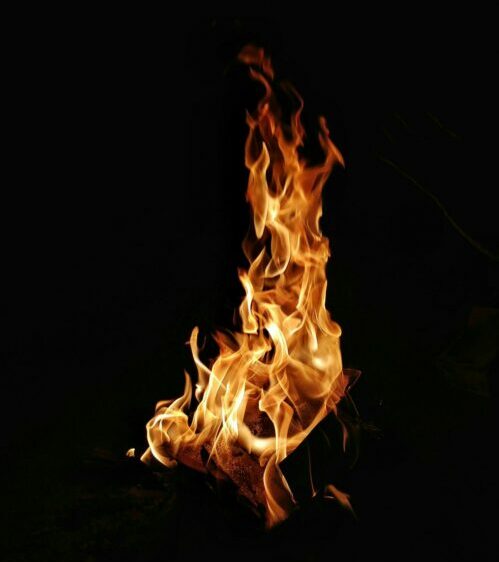
That vivid, first-century moment when flaming tongues settled on each one must not be discounted—never ignored, never mocked. In cinematic detail, Luke was anointed to describe the scene for all who are called to His harvest. It could only be described by one who was present and experienced the Spirit’s baptism.
The sound of wind was heard, and tongues of fire rested on those in the house—and then a miracle occurred which had never happened in all human history. The Holy Spirit enabled them to speak languages they had never studied, learned, or spoken. Pilgrims from across the known world, in Jerusalem for the Pentecost festival, were astonished because they heard their family languages spoken by uneducated Galileans. It was, by any account, a confusing scene because neither the citizens nor the pilgrims understood what was happening. They could only wonder: What does this mean? But those who were immersed in the Spirit knew they were not drunk on new wine. They knew it was God fulfilling His promise right on time.
Apostle Peter explained it to the confused, skeptical, and mocking crowd. It is not drunkenness. It is not emotionalism. It is not heretical. It is not demonic. It is not for a select few nor even for the first-century church alone. It is the fulfillment of God’s promise prophesied by Joel, God’s prophet (Acts 2:16). It is assurance that “whosoever shall call on the name of the Lord shall be saved” (Acts 2:21 KJV). It is irrefutable proof that God raised Jesus from the dead (Acts 2:32). And it is just as irrefutable that God has made that same crucified and resurrected Jesus both Lord and Christ (Acts 2:36).
But wait! Despite cessationist errors, the gift of the Holy Spirit is for “all that are afar off, even as many as the Lord our God shall call” (Acts 2:39). I am so glad that God did not stop calling people in the first century. Otherwise, you and I would not be saved or filled with the promise. And the very fact that cessationists preach the gospel and invite people to be saved proves their beliefs to be wrong. God still graciously calls whosoever will to receive His promise of salvation and the gift of the Holy Spirit.
In Acts 2, the fulfillment of God’s promise—to pour out His Spirit on all flesh—was a continuation of God’s promise to do a new thing (Isaiah 43:19) and to enact a new covenant (Jeremiah 31:31). The fulfillment of Joel’s prophecy would enable believers to become new creatures in Christ Jesus (Galatians 6:15), to obey a new commandment, and to live in “the true light [that] now shines” (1 John 2:8 JUB).
For Christians, then, Pentecost carries this dual weight: the ancient rhythms of harvest and covenant, overlaid with the unprecedented miracle which occurred in a room in first-century Jerusalem on an otherwise unremarkable spring morning.
The early church did not celebrate Pentecost as a single day so much as a season of 50 days from the paschal sacrifice. It was a season of sacred joy in which fasting was forbidden and prayer was offered standing, not kneeling, as a sign of resurrection life. The season closed with Pentecost, the 50th day.
Over the centuries, the church celebrated Pentecost in diverse manners: some with pageantry, others with processions, still others with miracle plays. In medieval times, European congregations released doves through holes in the roof to signify the descent of the Spirit, though ascending doves do not correctly portray the descending Spirit. In France and Italy, pastors would scatter red rose petals from the gallery of their churches signifying the tongues of fire falling.
The Reformers, suspicious of what they saw as pageantry substituted for genuine piety, stripped away much of the theatrics and cleared the cathedrals of their rose petals and doves. But they kept Pentecost on the calendar. Even the most stringent Reformers recognized that it commemorated something too central to Christian faith to remove: God’s Spirit poured out upon all people regardless of language, race, culture, or nation.
Much diversity exists across 21st-century Christianity: diverse practices, diverse theological thought, diverse traditions. Yet, something links them all: the conviction that Pentecost is not mere history. The Spirit that blew into a house in first-century Jerusalem is still present in the church. The fire still burns fiercely. That Spirit cannot be contained in a building, not in theological belief, not in a calendar’s date. He resides in the hearts of believers everywhere who allow Him to come in.
Pentecost is not a secret feast. It rushes in like wind. It deposits a fire. It speaks the language of God and of angels. It disturbs the intellectuals, the skeptics, and the unbelievers. It inflames the spirits of those baptized in it.
Every year, when the church celebrates this Feast of Firstfruits and the Acts 2 narrative is read aloud, the fire blazes and souls cry out, “Come, Holy Spirit. Let your fire burn in me.”