

An entire generation died in the wilderness. Forty years of walking. Forty years of collecting manna. Forty years of grumbling. Forty years of God miraculously providing for them. Forty years of following the visible presence of God.
When reflecting on the resurrection of Jesus, it may seem strange to begin with the wilderness wandering of the Israelites. However, we find ourselves in a situation mirroring theirs. We are a liberated people looking forward to the promise of an Edenic land, and yet we find ourselves in a land marked by death. But it is still the same providential hand that sustains us. The Israelites were given manna; we have received the body of the Messiah.
But what does all this have to do with the resurrection? As Christians, the resurrection is the central doctrine of all our beliefs. Paul said if Christ has not been raised, “we are of all people most to be pitied” (1 Corinthians 15:19 ESV). Without it, we are completely hopeless. While we commemorate the day of our Messiah’s resurrection, one question would benefit us greatly, should we take the time to consider it: What has changed because of the resurrection of Jesus Christ?
The resurrection changed everything, right? But we still face failure. We still grumble. We still rebel against the God who saved us. We still wander around a world that looks less like Eden and more like the wilderness, more like hell than heaven.
We are like Israel, constantly living a mixed bag of faithfulness and failure. However, because of the resurrection, we have hope. It is not simply a future hope—a promise for a time unknown—nor is it just an esoteric reality now. The power of Christ’s resurrection is our daily hope because it is the power which transforms all aspects of the Christian life. Our lives in this present world are strikingly paralleled to the wandering Israelites in the wilderness, with this incredible difference: The same power that raised Jesus from the dead is not dwelling in a secluded chamber of the tabernacle, but it lives in us.
In what way has this resurrection power changed our lives? Lest we forget, Paul reminds us that the wages of sin is death (Romans 6:23). Prior to the resurrection, animal sacrifice was the regular, messy reality. It was the visceral reminder that sin puts blood on our hands. Prior to the resurrection, as the preacher of Hebrews says, the sacrifices were performed year after year because the blood of bulls and goats was not able to atone for sin (Hebrews 10:1–4). Prior to the resurrection, we were slaves to sin, held in bondage by its power. But now, on the other side of history, where the tomb stands empty and robbed of its authority, we are able to glorify God because we can truly know that we are forgiven, washed white, made pure, cleansed of every sinful stain. That is a reality that we can stand upon confidently. And even more, Christ has imputed to us His own righteousness, so that we will be glorified with Him as though His works were our own. That is why Jesus says to the church in Laodicea, “The one who conquers, I will grant him to sit with me on my throne, as I also conquered and sat down with my Father on his throne” (Revelation 3:21). And Paul tells us that this has already begun, for he writes to the Ephesians, “Even when we were dead in our trespasses, [God] made us alive together with Christ—by grace you have been saved—and raised us up with him and seated us with him in the heavenly places in Christ Jesus” (Ephesians 2:5–6).
The depths of the wonder that we possess because of the resurrection of our Lord have never been fully explored. An old hymn says it well: “The half has never yet been told.” Contemplate the gift we have through the power of Christ’s resurrection, and you will find “joy unspeakable, and full of glory.”
How beautiful to think that common people are filled with God’s Spirit, partakers of the divine nature (2 Peter 1:3–4); to know that the curtain was torn and we may enter boldly before the throne of grace (Hebrews 10:19–22). Something changed. Everything changed. The promise of dwelling in the presence of God has become a reality that we can experience now. The resurrection grants us access to that for which David longed for his whole life:
One thing have I asked of the Lord, that will I seek after:that I may dwell in the house of the Lord all the days of my life,to gaze upon the beauty of the Lord and to inquire in his temple. (Psalm 27:4)
While this life might be filled with “light momentary afflictions” (2 Corinthians 4:17) and our wilderness wanderings may tempt us to grumble, through the power of the resurrection, we have new life even now in this land stained by death. The living water is in us—God’s children—and it brings new life wherever our wanderings take us.
We experience the tension of the “already but not yet” as we daily face life and death, blessings and curses, glimpses of the promised land while the wilderness surrounds us. The apostle Paul was acquainted with suffering more than many of us will ever know, yet he understood this mystery. The entire anthology of his letters bears witness to this tension that the resurrected life is the reality of Christ’s presence renewing us even as the outward man perishes (2 Corinthians 4:16). Thus, whether he lives or dies, Paul’s words ring out like an anthem, “That I may know him and the power of his resurrection, and may share his suffering, becoming like him in his death” (Philippians 3:10).
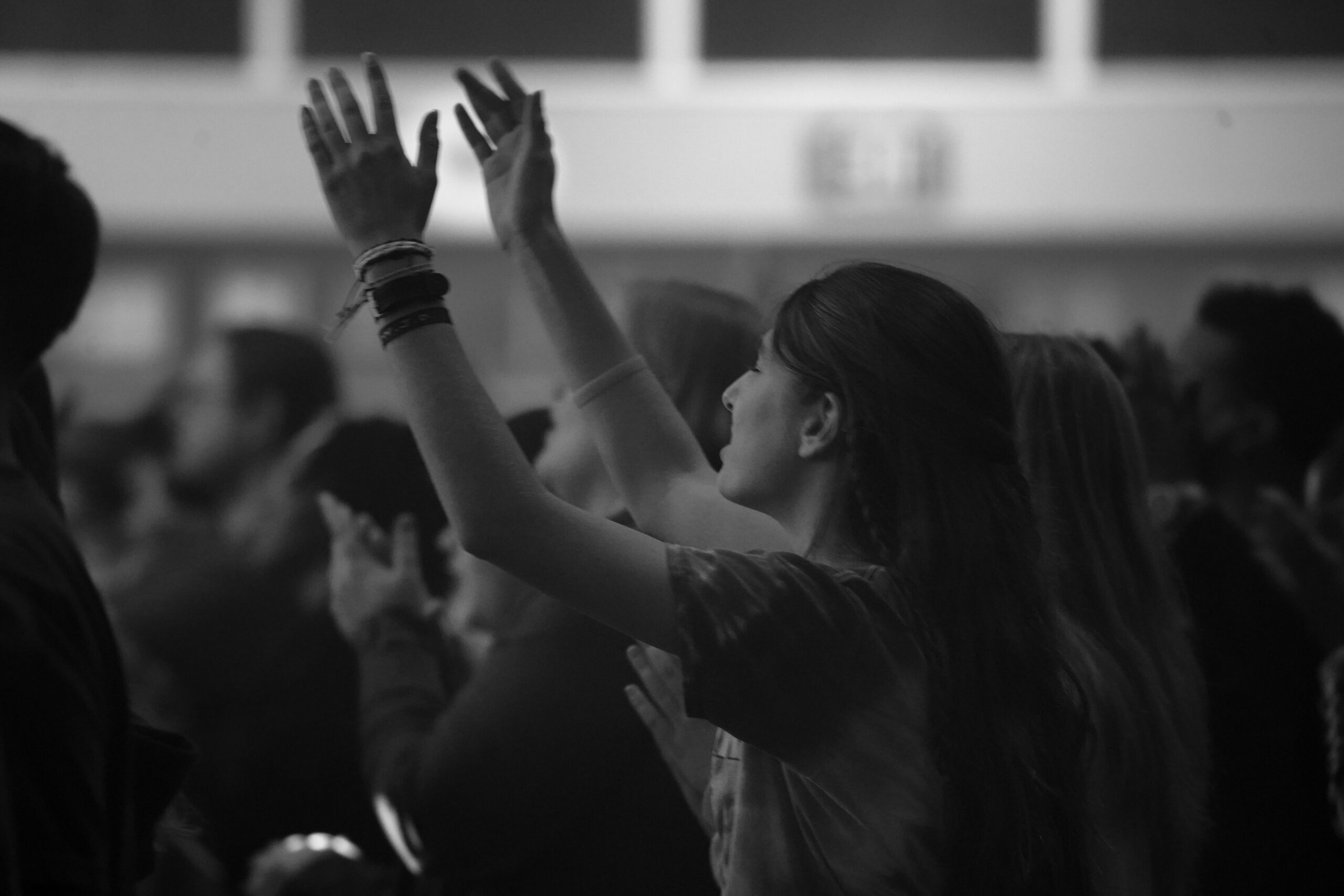
This is the message of Scripture—it points to Christ and what He has accomplished through His life, death, and resurrection. Sin’s curse has been broken. While we still live in this world, we are no longer imprisoned by its chains. Our hearts overflow with endless praise. Like David and Paul, we join our own voices with those who proclaim,
No guilt in life, no fear in death;
This is the power of Christ in me.
From life’s first cry to final breath,
Jesus commands my destiny.
(Stuart Townsend and Keith Getty, “In Christ Alone,” 2001)