
The faith community that came to be known (in 1952) as the Church of God of Prophecy (CGP) has, at its core, been captive to the spiritual journey of founder A. J. Tomlinson, an Indiana Quaker. Nowhere is this more evident than in the fact that CGP was, for decades, the only Pentecostal denomination in the United States committed to interracialism at all levels of the body. This stands in stark contrast to the axiom that most Pentecostal groups failed at interracialism within a decade of the fabled 1906 Azusa Street Revival.
In some states, the CGP may have been the first church to defy Jim Crow laws in their worship services. African Caribbeans, African Americans, and Latin Americans are charged with the leadership of states/regions whose composition includes European Americans as the majority. This unprecedented approach has distinguished the CGP not only among Classical Pentecostals but also among many denominations in the United States.
The Westfield Years
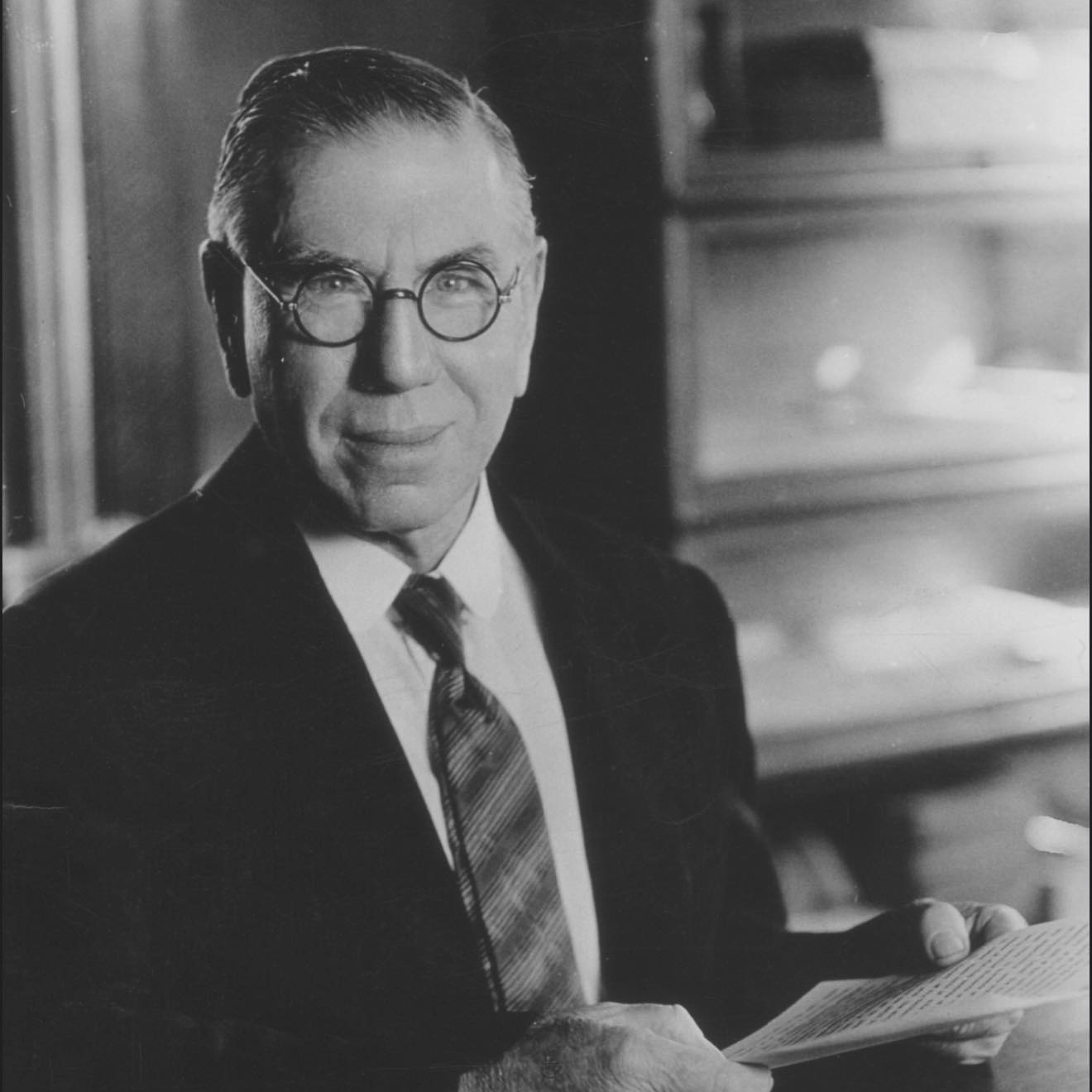
Ambrose Jessup Tomlinson was born on September 22, 1865, near Westfield, Indiana, to Milton and Delilah Tomlinson. Grandparents Robert and Lydia Tomlinson joined Antislavery Friends and participated in the Underground Railroad. Having studied at the prestigious Westfield Academy and having been reared in a moderately well-to-do entrepreneurial family in Westfield, Indiana, provided the young A. J. Tomlinson with forays into the business and political arenas.
The gospel call came to overshadow the serene life one would envision in this large, rural Quaker community. Tomlinson would alter course as a result of encounters with Holiness Friends. This group was epitomized in the person of his boyhood neighbor, Seth Rees, the “Indiana Earthquaker,” who scorned mediocrity by proclaiming “Win or die!” Holiness evangelists owed much to 19th-century Quakers when they dismissed creeds and rituals, spurned ecclesiastical hierarchy, or acknowledged Holy Spirit inspiration from both male and female, clergy and laity. Meanwhile, the significant African American community in Westfield meant that among the closest neighbors of the Tomlinsons were two Black families. Freed
Blacks and enslaved Africans who escaped through the Underground Railroad participated in “Colored” camp meetings held each summer in Westfield, which attracted Whites.[1]
J .B. Mitchell, a graduate of Oberlin College, introduced Tomlinson to the famous revivalist Charles G. Finney. Founded in 1833, Oberlin was the first institute of higher education in the United States to conduct the “joint education of the sexes.” By 1835, race was no longer a barrier to admission, either. In 1894, Mitchell and Tomlinson founded the Book and Tract Company. This colporteur work led to short-term trips to Appalachia, but also exposure to more radical Holiness figures like Frank Sandford, who published the periodical titled Tongues of Fire (1894). Stays at Sandford’s “Holy Ghost and Us Bible School” in Shiloh, Maine, account for two water baptisms there, one at the hands of Sandford himself when Tomlinson wrote in his diary on October 1, 1901, “I was baptized by Mr. Sandford in the Androscoggin River into the ‘church of the living God,’ for the evangelization of the world, gathering of Israel, new order of things at the close of the Gentile age.”[2]
Appalachia Beckons
The exposure to the Acts 2 commune as practiced by Shiloh, and some awareness of John Alexander Dowie’s Zion City in Illinois, would provide models that A. J. Tomlinson’s family sought to imitate in Culberson, North Carolina. The family move was completed in 1899 and ultimately accounts for the unexpected interaction with B. H. Irwin’s Fire-Baptized Holiness Association (FBHA). Some of Irwin’s staunch supporters planted what amounted to an emerging national headquarters in a Bradley County, Tennessee, hamlet named Beniah, a short distance from Cleveland, Tennessee. Tomlinson launched an eight-page serial, Samson’s Foxes, while simultaneously publishing reports of living on the faith lines like George Mueller in the Pentecostal Herald, God’s Revivalist, and the Evangelical Visitor. Tomlinson projected his Mount Zion Mission Home, which opened with an industrial school and orphanage, to be a virtual “garden of Eden.”[3]
Shades of the FBHA are seen in Tomlinson’s rejection of “tobacco, opium, pork, tea, and coffee.” Yet another like source would be a group of evangelists—Milton McNabb, Joe Tipton, William Hamby, and William Martin—who preached the noteworthy Shearer Schoolhouse Revivals in Cherokee County, North Carolina, that began in 1896. After the initial revival, Tomlinson would claim in 1913 that approximately 100 people spoke in tongues during later meetings.[4]
Evangelists either living in or associated with Beniah carried the FBHA message to Bryant’s home at Camp Creek, North Carolina. Various issues of the FBHA’s Live Coals of Fire (1899–1900) reported on common efforts of William M. Martin, R. Frank Porter, and Stewart T. Irwin, the son of B. H. Irwin. This same magazine showcased Ruling Elder W. E. Fuller, an African American pioneer who planted 50 churches in 10 years. Fuller would rise to the level of assistant general overseer of the FBHA when J. H. King, an imposing figure in IPHC history, led the group.[5]
Bryant’s small group witnessed crosscurrents of various spiritualities, like fellowship with R. G. Spurling. Spurling’s roots lay in Landmark Baptists, but his identity was captured in the independent Christian Unions he started. Spurling’s first such effort was the short-lived Christian Union at Barney Creek, Monroe County, North Carolina, in 1886. The ideals that defined Spurling were compiled in his booklet, The Lost Link, published in 1920 but drafted years earlier. Another player in the ferment was R. Frank Porter, recently ruling elder for the FBHA in Tennessee. The seminal organization of the Holiness Church at Camp Creek on May 15, 1902, was carried out by both Spurling and Porter. Spurling was chosen pastor, while Porter soon thereafter married Alice Cooke of Cleveland, Tennessee, and entered the University of Chattanooga at Athens (1905).
June 13, 1903
The circle of those associated on various levels with the Holiness Church at Camp Creek included A. J. Tomlinson, who was destined to transform this group. A diary entry dated June 13, 1903, would say simply, “I was ordained as minister of the gospel of the Holiness church at Camp Creek, N.C.”[6] Tomlinson had arrived at Bryant’s house the previous evening and prayed on the mountain the next morning before continuing their discussions.
An expanded version of this event can be found in a significant book published by A. J. Tomlinson in 1913 while serving as general overseer of the Church of God (Cleveland, TN). Titled The Last Great Conflict, we are told a “more careful study of the New Testament order” resulted in the work being “revived and taking on a new impetus.”[7] This 1903 turning point for Tomlinson manifests itself in a diary now consumed with merciless details of organization in motion. Tomlinson was immediately chosen pastor of the Camp Creek congregation, and within a year, he was pastor of three of the four related local groups. He edited, with M. S. Lemons, a periodical titled The Way, which ran an article by R. Frank Porter.
Tomlinson’s rescue and expansion of this loose association helped explain, in part, his 1904 move from Appalachia to Cleveland, Tennessee, and its well-connected train station. Writing in 1939, Homer A. Tomlinson would note: “. . . they called themselves an Association, [they] had not yet called themselves the Church of God.”[8] A. J. Tomlinson’s first account of the January 26–27 conference—which is counted as the First General Assembly of the Church of God (Cleveland, TN)—may be found in a diary entry dated January 30, 1906: “I arrived home about midnight last night from Camp Creek, N.C. We held a Church assembly there; I acted as the ruling Elder and made the minutes of the proceedings.”[9]
It was not until January 11, 1907, that the group took on the name Church of God. Despite his restorationist impulse, Tomlinson would have known that the name Church of God was first used by John Winebrenner’s Church of God, having done so as far back as 1830. D. S. Warner had also identified with this “Bible name” in Indiana by 1880 and Frank Sandford by 1897. Writing in Last Great Conflict, Tomlinson continues:
This, however, was not meant to debar the use of the other Scriptural names, such as: “The Church,” “Churches in Christ,” “Church **** in God our Father and the Lord Jesus Christ,” etc.[10]
In 1914, this same group would finalize their selection of A. J. Tomlinson as general overseer, or as he put it in his diary dated November 15, 1914, “until Jesus comes or calls.”[11]
Note: Please enjoy the second part of this article, “Snapshots of a Spiritual Journey,” in the August White Wing Messenger.
_______________________________________________
[1] For a full treatment of the early life of A. J. Tomlinson, see Roger G. Robins, A. J. Tomlinson: Plainfolk Modernist (University of Oxford, 2004).
[2] A. J. Tomlinson, Diary, vol. 1, October 1, 1901. Manuscripts Division. Library of Congress, Washington, D.C.
[3] A. J. Tomlinson, Diary, vol. 1, April 14, 1902. Manuscripts Division. Library of Congress, Washington, D.C.
[4] A. J. Tomlinson, The Last Great Conflict (Cleveland: Walter E. Rogers, 1913), 189. There are no contemporaneous publications at the time that confirm the claim of tongues-speech.
[5] Harold D. Hunter, “Fire-Baptized Holiness Association of America Impact on the Emerging Church of God (Cleveland, TN): 1898–1906,” Cyberjournal for Pentecostal-Charismatic Research 25 (March 2018).
[6] A. J. Tomlinson, Diary, vol. 1, June 13, 1903. Manuscripts Division. Library of Congress, Washington, D.C.
[7] A. J. Tomlinson, The Last Great Conflict, 192.
[8] Homer A. Tomlinson, The Great Vision of The Church of God (Queens Village, NY: published by the author, 1939), 6.
[9] A. J. Tomlinson, Diary, vol. 1, January 30, 1906. Manuscripts Division. Library of Congress, Washington, D.C.
[10] A. J. Tomlinson, The Last Great Conflict, 193.
[11] A. J. Tomlinson, Diary, vol. 3, November 15, 1914. Manuscripts Division. Library of Congress, Washington, D.C.