

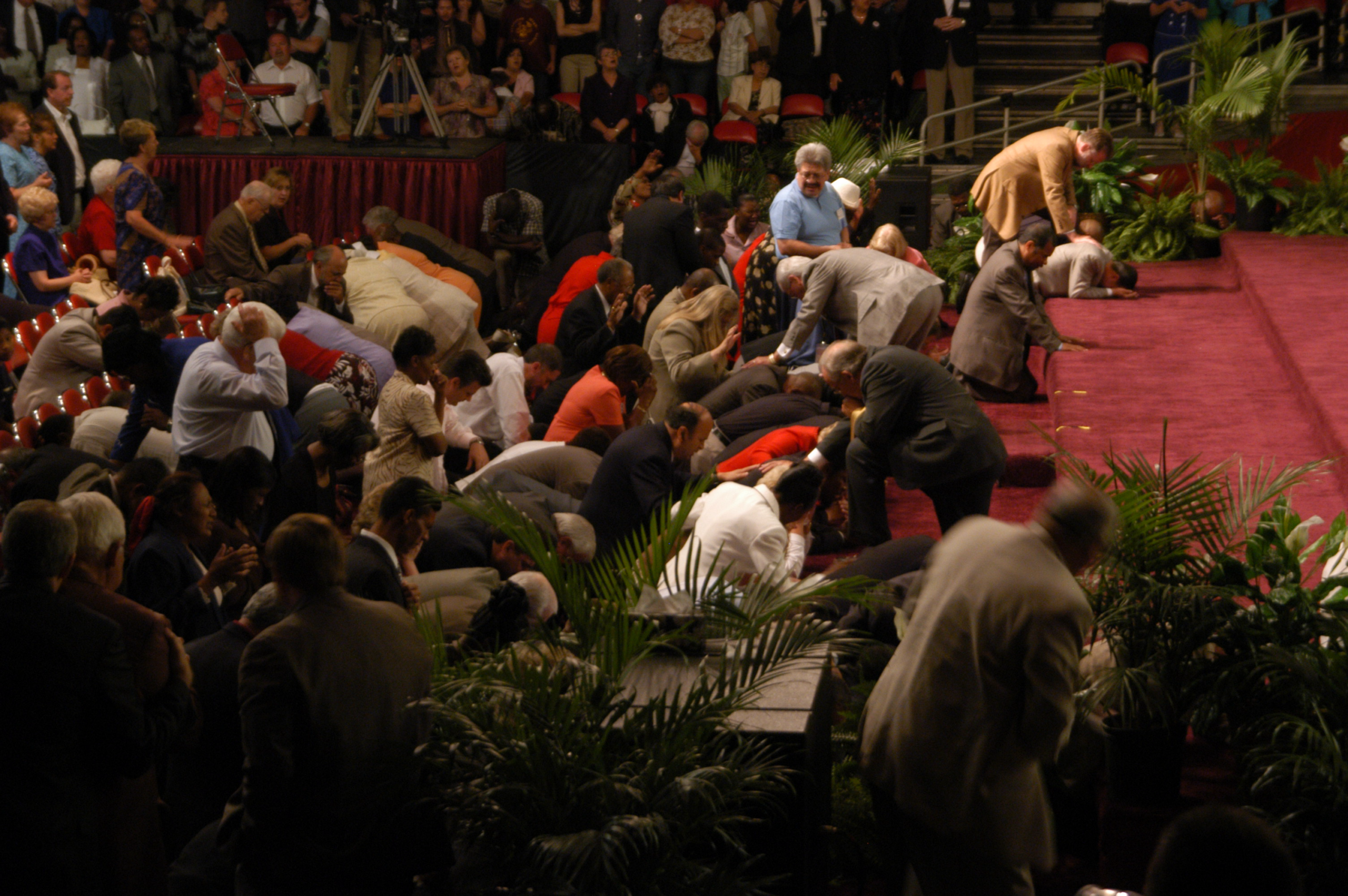
“When Simon saw that the Spirit was given at the laying on of the apostles’ hands, he offered them money and said, ‘Give me also this ability so that everyone on whom I lay my hands may receive the Holy Spirit’” (Acts 8:18–19 NIV).
Simon reveals a profound truth. It is not his sin, which we understand well, but his hunger that stands out. He was a man who had captivated an entire city with signs and wonders. Luke reports that the people of Samaria, from the least to the greatest, called him “the Great Power of God” (Acts 8:10). Simon was no novice. He had studied unseen forces and wielded influence over crowds. He recognized real power when he encountered it.
But when Philip arrived in Samaria to preach the kingdom of God, Simon witnessed something unprecedented. Luke describes him as being “astonished,” a term also used for those who saw Jesus cast out demons. Philip’s miracles were not merely for show. They were genuine. They resulted from a life deeply filled with the Holy Spirit, not performative acts. Simon—the renowned Simon—could not look away.
He followed Philip everywhere. When Peter and John arrived from Jerusalem and laid hands on the new believers, Simon saw the Holy Spirit descend on ordinary Samaritan men and women with undeniable power, and something inside him snapped. Simon reached for his money, eager to buy it.
The church body has discussed Simon’s intentions for centuries. However, before condemning him, let us consider what his desire exposes about the church.
The Testimony that Needs No Stage
We live in an era filled with Christian noise. We broadcast, create platforms, and promote the faith. We craft logos for revivals and develop strategies for spiritual development. While there is nothing wrong with these activities individually, they become problematic when they replace the only true form of advertisement the Spirit of God ever wanted: a life so visibly filled with God’s presence that others are compelled to ask, “How much?”
Philip did not organize a campaign in Samaria. Instead, he fled there as a refugee fleeing persecution (Acts 8:3–4). He was not an official evangelist by design. Originally a table server, he became a vessel spreading seed. Despite this, “the crowds with one accord paid attention to what was being said by Philip, when they heard him and saw the signs that he did” (Acts 8:6 ESV). These signs were not mere tricks but were the natural outcome of a man who walked so closely with the Spirit of God that heaven seemed to seep through his every action.
Simon did not hear a testimony about the Holy Spirit. He witnessed one.
Simon never heard a testimony about the Holy Spirit. He observed one firsthand. He saw unclean spirits leave bodies with shrieks, watched paralytics stand up, and saw lame men walk. Then—and this is the moment the text emphasizes—he saw ordinary, Spirit-filled hands laid on people, and something unprecedented happened, something that no amount of money, no matter how long Simon had practiced his mystical arts, could produce. An authentic presence, alive and real, descended on those people. It was something genuine, impossible to fake, especially to someone like Simon who had dedicated his life to mastering the dark arts.
That is the power of a Spirit-filled witness. It is not just the words. The words are important; after all, Philip preached Christ. But it was the undeniable force behind the words that sparked an irresistible longing in a man who had seen everything.
What Samaria Saw
The early Pentecostals instinctively understood this. The revivals at the Azusa Street Mission, starting in 1906, were not mainly founded on polished preaching. Instead, they depended on a community so moved by the Holy Spirit that strangers would wander in off the street, drawn by something truly unprecedented. Skeptics often entered as mockers but left in tears, speaking in tongues they had not learned. Reporters visited to write exposés, yet they often left having been influenced themselves.
This core message in Acts 8 emphasizes that the church not only speaks of the Spirit but also demonstrates it. When believers in Christ walk in genuine, Spirit-filled unity and cross cultural divides like the Jewish-Samarian boundary—just as Philip, Peter, and John did—the observing world will be drawn in. They will approach, imitate, and desire what we possess.
And what we have cannot be bought. That is exactly Peter’s point (Acts 8:20). The gift of God is not a commodity. It cannot be exchanged through techniques or acquired through transactions. It is given by grace to those who have fully surrendered to the Lordship of Jesus Christ, and that surrender in itself serves as the most powerful testimony a human life can offer.
Unified to Reconcile: The Samaritan Dimension
We should not overlook the significance of geography. Samaria was a land marked by ancient scars. Jews and Samaritans shared a common bloodline, but their divisions predated Philip’s arrival. Normally, a devout Jew avoided going to Samaria. However, the Spirit directed a Spirit-filled man into the midst of this division, and the revival that ensued transcended traditional boundaries.
When Peter and John went to pray for the Samaritan believers, they crossed a line shaped by centuries of religious hostility. They placed Jewish apostolic hands on Samaritan shoulders, and the Holy Spirit was poured out without distinction—the same Spirit, the same gift, a unified church.
This is the unifying power of the Spirit that is poured out, and it remains as vital today as it was in Acts 8. Our communities remain divided, and many churches are often still segregated by race, class, and culture. However, the Pentecostal legacy—the story of Azusa, where Black, White, and Latino believers knelt together—has always been that God’s fire disregards our divisions. When the Spirit descends, He brings reconciliation. He fosters unity. He builds within the church a community so remarkably united that the observing world is compelled to ask, “What is this happening here?”
The fire of God does not observe our divisions.When the Spirit falls, He reconciles.
Testify with Your Life
As Pentecost Sunday nears, the church is called to reconnect with her origins, not as mere nostalgia, but as a celebration of renewal. The gifts of the Spirit are active, not relics. Healing continues to occur. Prophecy still nourishes the community. Speaking in tongues remains a sign that the Spirit’s work is ongoing. New churches continue to emerge as Spirit-filled men and women spread like seed into the soil of uncharted territory.
But Samaria’s question is not just “Do you believe in the gifts?” It is also “Do you possess something so authentic that even Simon, a man who has seen it all, would follow you through the city and reach for his wallet?”
That reality is not created through service. It is nurtured through surrender, developing quietly in hidden moments. It flourishes in the daily, unpressured yielding to the Holy Spirit during prayer, Scripture reading, and in everyday places where no one observes. This growth then spills over into neighborhoods, broken families, and even into the Samarias we were advised to avoid. The testimony spreads like fire, causing people who have never heard our words to long for what they observe in our lives.
The church does not need a louder voice. The church needs a deeper fire. When we have that fire, we won’t need to persuade the world. We will only need to show up, and the Simons of our generation will come running.
This month, ask the Holy Spirit not for better words, but for a deeper witness. Pray for the fire to fall—not because you planned it, but because you carried it. Then go to your Samaria—the neighborhood, the coworker, the estranged family member—and let your life do what no platform ever could: make someone lean in and ask, “What is it that you have?”