

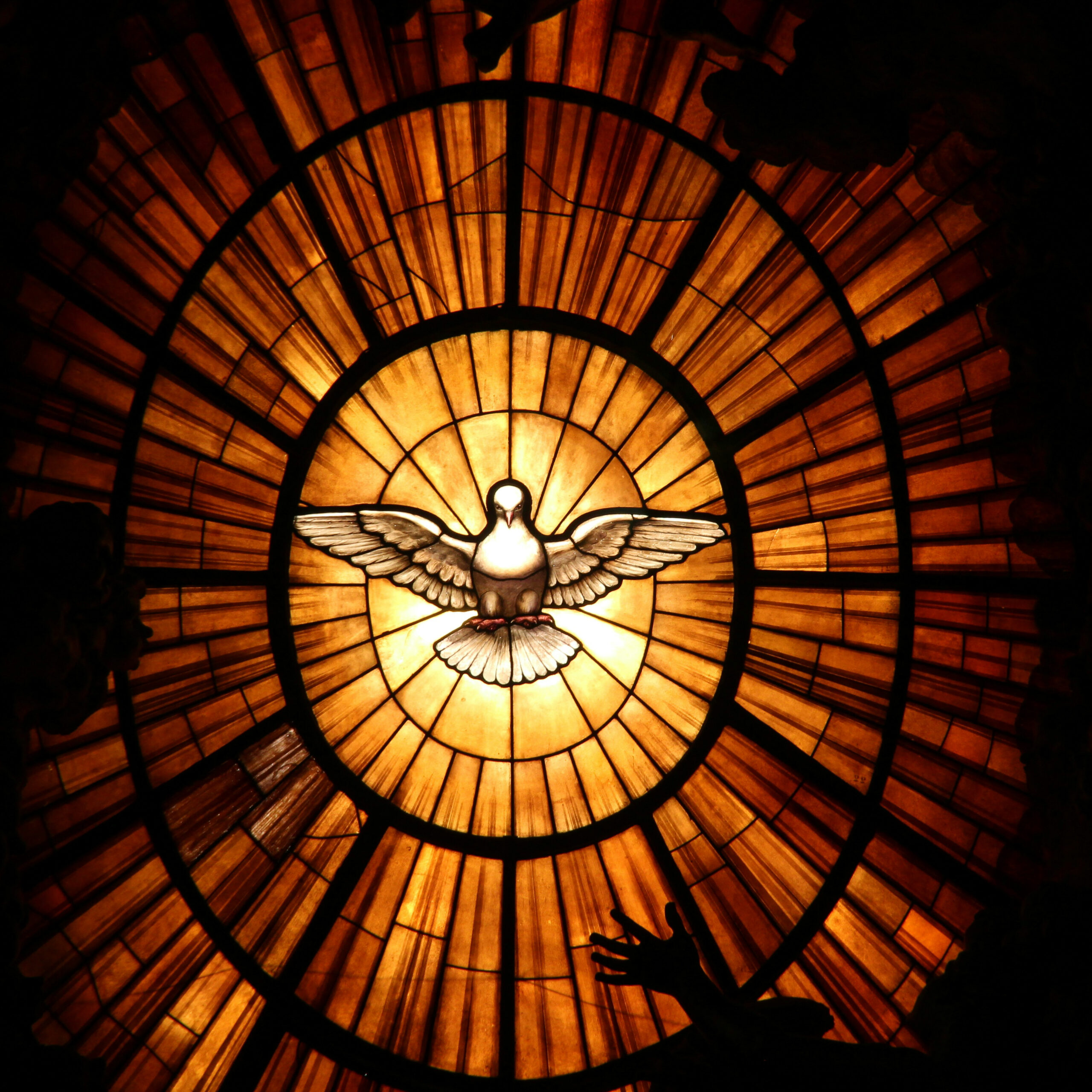
“Whoever has ears, let them hear what the Spirit says to the churches.” (Revelation 2:7 NIV)
There is something deeply significant about the way Jesus addressed the seven churches in Revelation. After speaking to each church, He repeatedly gave the same invitation: “Whoever has ears, let them hear what the Spirit says to the churches.”
The church is not called merely to speak, organize, plan, build, program, or preserve what has been handed down to us. The church must hear what the Spirit is saying and then follow His leading.
This has particular significance for the Church of God of Prophecy. Our history tells the story of people who were hungry for a deeper walk with God and desired to see the church return to the pattern of New Testament Christianity. They were searching for greater truth and for a church that would submit itself to the Word of God and the leadership of the Holy Spirit.
The question for us today is not simply “Where did we come from?” The more searching question is “Are we still willing to follow where the Spirit is leading us?”
A Foundation Built on the Search for Truth
In Foundations: The Church of God of Prophecy—A Concise History, Polity, and Doctrine, Adrian L. Varlack, Sr., describes the spiritual hunger that influenced our forefathers in their search for truth and their desire to recover New Testament Christianity. Varlack points to concerns about spiritual fervency and obedience to the Word of God as factors that stirred our religious forefathers to search for truth. He also records Richard G. Spurling’s concern that earlier reformers had failed to leave sufficient room for “the leadership of the Holy Ghost and for conscience” (Varlack, Foundations, 17–18, 34).
This is important. Our foundation was not simply built around a name, constitution, system of government, program, or organization. There was a deeper hunger—a hunger for God, truth, holiness, the Word, and the operation of the Holy Spirit. The 1896 revival at the Shearer Schoolhouse became another significant moment in this spiritual journey and contributed to the movement’s embrace of Pentecostal faith and practice. Therefore, when we speak about the Church of God of Prophecy as a Spirit-filled movement, we are not simply using attractive religious language. It is part of our spiritual heritage.
But heritage carries responsibility. What God did among those who went before us must not become merely something we celebrate. It must become something we continue to live.
When the Spirit Leads, the Church Must Follow
The Holy Spirit is not simply a doctrine to be defended or a subject to be discussed during Pentecostal worship. He is the One Christ promised to send to guide His people into truth (John 16:13).
That means the Spirit must have more than a place in our statement of faith. He must have a place in our decisions, priorities, ambitions, and plans. He must be welcome when He interrupts our plans, and He must be obeyed when His direction differs from what we have already decided.
The danger comes when the church becomes so organized that it no longer knows how to pause and ask, “Holy Spirit, what are You saying?”
We can have excellent plans and still miss God’s direction. We can have impressive programs and still miss God’s purpose. We can become so familiar with yesterday’s victories that we stop seeking today’s direction.
The Spirit who led the church yesterday is still leading the church today.
A Personal Lesson in Yielding
I have personally learned that following the leading of the Holy Spirit is not always convenient. I remember an experience I had around 2003. At the time, our national overseer (national bishop) gave me some money for the production of our annual church calendar. The calendar carried the mission statement “Turning to the Harvest—A Passion for People (2002–2004 Assembly Year).”
My focus was on getting the assignment done. While I was on my way to purchase the materials needed for the production, I saw an elderly woman walking towards me. She did not look like a beggar. She had not approached me for anything, and she did not ask me for money. But as I looked at her, I heard what I understood to be the prompting of the Holy Spirit: “Give to this woman to keep what you have.”
I struggled with the leading. I thought, What do I have to keep? The money with me was a designated fund for a specific church assignment. So I kept walking.
I was about twenty feet away from the woman when I heard the same prompting again: “Give to this woman to keep what you have.” I argued within myself. She had not asked me for anything. Should I now run after her?
Eventually, I walked away without obeying the voice.
When I arrived at the place where I intended to purchase the papers for the calendar production, I discovered that N20,000 (approximately US$15 at today’s exchange rate) was missing from the money I had been given. At that point, I could not simply return to my overseer and say, “I lost N20,000 out of the fund I was given.” Who would believe such a story?
Instead, I had to source and borrow money to complete the assignment and deliver the calendar.
That experience taught me something that has remained with me for years: Whenever we fail to yield to the leading of the Spirit, we end up being a loser. This can happen in any form.
If I had listened to the prompting, I probably would not have given more than a thousand naira to that woman. I cannot say with certainty why that prompting came to me, nor can I claim to know everything that happened that day. But I learned a lesson about obedience.
The lesson was not simply about money. It was about yielding to the leading of the Spirit.
Sometimes, the greatest loss is not what leaves our hands; it is what we miss because we refuse to obey God.
The Spirit and the Harvest
There is another interesting connection in this experience. The calendar I was working to produce carried the message “Turning to the Harvest—A Passion for People.” This was not simply a slogan invented for that calendar. The 1994 International General Assembly emphasized “Turning to the Harvest,” while the 2002 International General Assembly carried the theme “A Passion for People.”
The 1994 Assembly record also contains a powerful statement from José A. Reyes, Sr.: “The Holy Spirit is the greatest evangelist in the church.”
That statement deserves serious reflection. We speak about evangelistic strategies, church planting, missions, leadership development, technology, and outreach methods. All these have their place. But the greatest evangelist in the church is still the Holy Spirit. We cannot replace His leadership with our methods or His direction with human wisdom.
The early church understood this. When the Holy Spirit spoke in Antioch, the church responded. Acts 13 tells us that while the believers worshipped and fasted, the Holy Spirit said, “Set apart for me Barnabas and Saul for the work to which I have called them” (Acts 13:2).
They did not merely acknowledge what the Spirit said. They obeyed.
When Churches Lose Spiritual Sensitivity
One of the challenges facing churches today is that we can become busy without being spiritually sensitive.
The problem is not that churches have programs. Programs can be useful. The problem begins when our programs, traditions, structures, or preferences become so important that we no longer make room for the Spirit to direct us.
- When programs become more important than prayer, we may spend hours discussing what should happen but little time asking God what He wants to happen (Acts 13:1–3).
- When tradition becomes stronger than obedience, we may defend something simply because it is familiar. Jesus challenged traditions that had displaced the commandment of God (see Mark 7:8–13).
- When fear of change becomes stronger than faith, we may resist what God is doing because it does not fit our expectations. Peter experienced this in Acts 10 when God challenged his traditional understanding and opened his eyes to what He was doing among the Gentiles.
The danger is not always that a church will stop functioning. Sometimes the greater danger is that it continues functioning while gradually losing its spiritual sensitivity.
Jesus warned the church at Ephesus that it had left its first love (Revelation 2:4–5), while the church at Sardis had a reputation for being alive but was spiritually dead (Revelation 3:1). These are sobering reminders that activity is not the same as spiritual life.
Paul’s instruction remains relevant: “Do not quench the Spirit” (1 Thessalonians 5:19).
COGOP Must Never Lose Its Spiritual DNA
The Church of God of Prophecy has traveled a long road. We have experienced changes in leadership, structures, methods, technology, communication, ministry models, and global circumstances. Yet one thing must never change: our dependence upon God and our willingness to follow His Spirit.
Our forefathers searched for truth. They prayed. They wrestled with Scripture. They sought holiness. They opened themselves to the moving of the Holy Spirit. They were willing to follow where God was leading.
That spiritual hunger must not become merely a chapter in our history books. It must remain part of our DNA.
The greatest honor we can give those who went before us is not simply to celebrate what they accomplished. It is to continue the spiritual journey they began.
To the Leaders and Members of COGOP
My appeal is simple:
Let us never become so successful that we become independent of the Holy Spirit.
Let us never become so experienced that we stop praying, so knowledgeable that we stop seeking God’s direction, or so organized that there is no room for divine interruption.
Let us never become so attached to our past that we cannot embrace what God is doing in the present.
And let us never confuse the preservation of our heritage with the preservation of God’s presence.
The Spirit is still calling the church to holiness, prayer, the harvest, love, service, and deeper surrender.
Perhaps the most important question before the Church of God of Prophecy today is not, “What is our next program?” It is “Holy Spirit, what are You saying to the Church?”
- If He redirects us, may we be humble enough to change direction.
- If He says wait, may we wait.
- If He says go, may we go.
- If He says give, may we give.
- If He says reach the forgotten, may we reach them.
- If He says turn to the harvest, may we turn.
We must listen intently because the church was never meant to lead the Spirit. The Spirit leads, and the church follows.
And if we continue to follow His leading, obey His Word, and remain faithful to Christ, we will not merely preserve the history of the Church of God of Prophecy. We will continue to fulfil the purpose for which God raised us up.